HISTORY
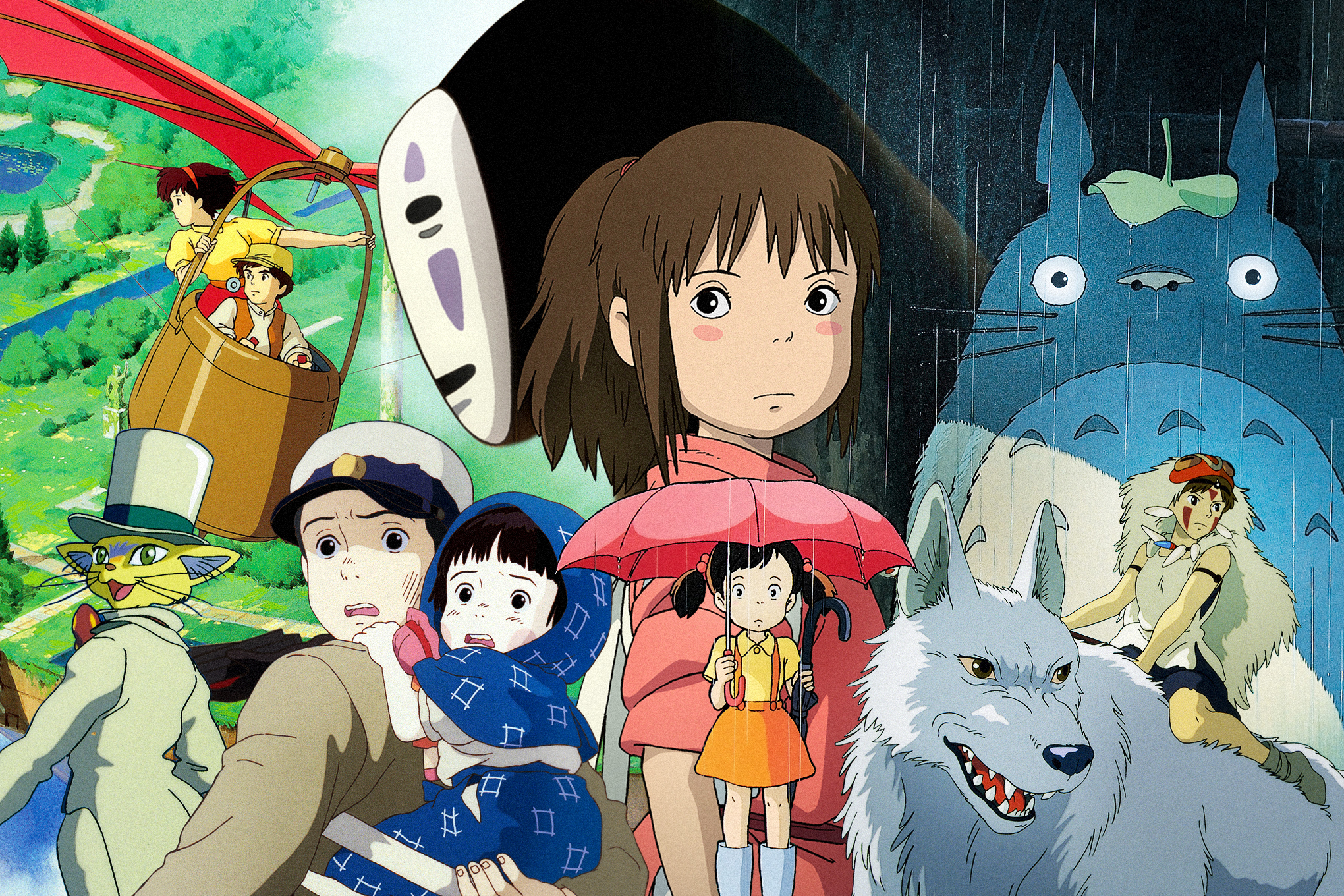
Studio Ghibli Inc. (Japanese: 株式会社スタジオジブリ, Hepburn: Kabushiki-gaisha Sutajio Jiburi) is a Japanese animation studio headquartered in Koganei, Tokyo. It is best known for its animated feature films, and has also produced several short subjects, television commercials, and two television films. Its mascot and most recognizable symbol is a character named Totoro, a giant spirit inspired by raccoon dogs (tanuki) and cats from the 1988 anime film My Neighbor Totoro. Among the studio's highest-grossing films are Spirited Away (2001), Howl's Moving Castle (2004) and Ponyo (2008). The studio was founded on June 15, 1985, by directors Hayao Miyazaki and Isao Takahata and producer Toshio Suzuki, after the successful performance of Topcraft's Nausicaä of the Valley of the Wind (1984). It has also collaborated with video game studios on the visual development of several games.
Five of the studio's films are among the ten highest-grossing anime feature films made in Japan. Spirited Away is second, grossing 31.68 billion yen in Japan and over US$380 million worldwide; and Princess Mononoke is fourth, grossing 20.18 billion yen. Many of their works have won the Animage Grand Prix award. Four have won the Japan Academy Prize for Animation of the Year. Five of their films have received Academy Award nominations. Spirited Away won the 2002 Golden Bear and the 2003 Academy Award for Best Animated Feature.
Tokuma Shoten era
Founded on June 15, 1985, Studio Ghibli was headed by directors Hayao Miyazaki and Isao Takahata and producer Toshio Suzuki. Miyazaki and Takahata had already had long careers in Japanese film and television animation and had worked together on The Great Adventure of Horus, Prince of the Sun in 1968 and the Panda! Go, Panda! films in 1972 and 1973. In 1978, Suzuki became an editor at Tokuma Shoten's Animage manga magazine, where the first film he chose was Horus. A year after his phone call with Takahata and his first encounter with Miyazaki, both about Horus, he made a phone call about the first film Miyazaki ever directed: The Castle of Cagliostro.
The studio was founded after the success of the 1984 film Nausicaä of the Valley of the Wind. Suzuki was part of the film's production team, and founded Studio Ghibli with Miyazaki, who also invited Takahata to join them.
The studio has mainly produced films by Miyazaki, with the second most prolific director being Takahata (most notably with Grave of the Fireflies). Other directors who have worked with Studio Ghibli include Yoshifumi Kondō, Hiroyuki Morita, Gorō Miyazaki, and Hiromasa Yonebayashi. Composer Joe Hisaishi has provided the soundtracks for most of Miyazaki's Studio Ghibli films. In their book Anime Classics Zettai!, Brian Camp and Julie Davis made note of Michiyo Yasuda as "a mainstay of Studio Ghibli's extraordinary design and production team". At one time the studio was based in Kichijōji, Musashino, Tokyo.
In August 1996, The Walt Disney Company and Tokuma Shoten formed a partnership wherein Walt Disney Studios would be the sole international distributor for Tokuma Shoten's Studio Ghibli animated films. Under this agreement, Disney also agreed to finance 10% of the studio's production costs. Since then, all three aforementioned films by Miyazaki at Studio Ghibli that were previously dubbed by Streamline Pictures have been re-dubbed by Disney. On June 1, 1997, Tokuma Shoten Publishing consolidated its media operations by merging Studio Ghibli, Tokuma Shoten Intermedia software and Tokuma International under one location.
Over the years, there has been a close relationship between Studio Ghibli and the magazine Animage, which regularly runs exclusive articles on the studio and its members in a section titled "Ghibli Notes." Artwork from Ghibli's films and other works are frequently featured on the cover of the magazine. Saeko Himuro's novel Umi ga Kikoeru was serialised in the magazine and subsequently adapted into Ocean Waves, Studio Ghibli's first animated feature-length film created for television. It was directed by Tomomi Mochizuki.
In October 2001, the Ghibli Museum opened in Mitaka, Tokyo. It contains exhibits based on Studio Ghibli films and shows animations, including a number of short Studio Ghibli films not available elsewhere.
Independent era
Between 1999 and 2005, Studio Ghibli was a subsidiary brand of Tokuma Shoten; however, that partnership ended in April 2005, when Studio Ghibli was spun off from Tokuma Shoten and was re-established as an independent company with relocated headquarters.
On February 1, 2008, Toshio Suzuki stepped down from the position of Studio Ghibli president, which he had held since 2005, and Koji Hoshino (former president of Walt Disney Japan) took over. Suzuki said he wanted to improve films with his own hands as a producer, rather than demanding this from his employees. Suzuki decided to hand over the presidency to Hoshino because Hoshino has helped Studio Ghibli to sell its videos since 1996 and has also aided the release of the Princess Mononoke film in the United States. Suzuki still serves on the company's board of directors.
Two Studio Ghibli short films created for the Ghibli Museum were shown at the Carnegie Hall Citywise Japan NYC Festival: "House Hunting" and "Mon Mon the Water Spider" were screened on March 26, 2011.
Takahata developed a project for release after Gorō Miyazaki's (director of Tales from Earthsea and Hayao's son) The Tale of the Princess Kaguya – an adaptation of The Tale of the Bamboo Cutter. The last film Hayao Miyazaki directed before retiring from feature films was The Wind Rises which is about the Mitsubishi A6M Zero and its creator.
On Sunday, September 1, 2013, Hayao Miyazaki held a press conference in Venice to confirm his retirement, saying: "I know I've said I would retire many times in the past. Many of you must think, 'Once again.' But this time I am quite serious."
In 2013, a documentary directed by Mami Sunada called The Kingdom of Dreams and Madness (Japanese: 夢と狂気の王国, Hepburn: Yume to kyōki no ōkoku) was created delving into the lives of those working at Studio Ghibli and the productions of the animated films The Wind Rises and The Tale of the Princess Kaguya, including storyboard sketching, inking, painting, and voice actor selection for the films.
On January 31, 2014, it was announced that Gorō Miyazaki will direct his first anime television series, Sanzoku no Musume Rōnya, an adaptation of Astrid Lindgren's Ronia the Robber's Daughter for NHK. The series is computer-animated, produced by Polygon Pictures, and co-produced by Studio Ghibli.
In March 2014, Toshio Suzuki retired as producer and assumed the new position of general manager. Yoshiaki Nishimura replaced Suzuki in the producer role.